RETABIT application Spotlight: Enabling a Local Energy Community in Mirasol (Ajuntament de Sant Cugat del Vallès)
1 de July de 2025
New application case on the RETABIT platform: Energy vulnerability and urban regeneration in Barcelona
2 de March de 2026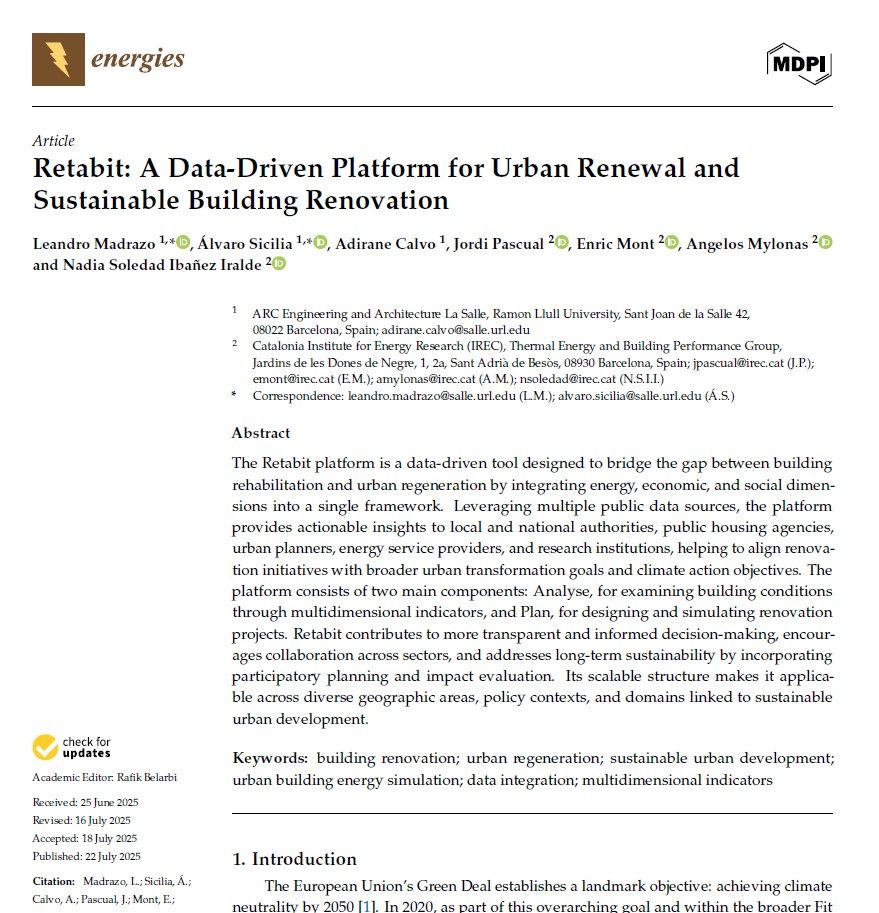
Madrazo, L., Sicilia, Á., Calvo, A., Pascual, J., Mont, E., Mylonas, A., & Ibañez Iralde, N. S. (2025). Retabit: A Data-Driven Platform for Urban Renewal and Sustainable Building Renovation. Energies, 18(15), 3895, 10.3390/en18153895. (https://lnkd.in/dr_kP7sb)
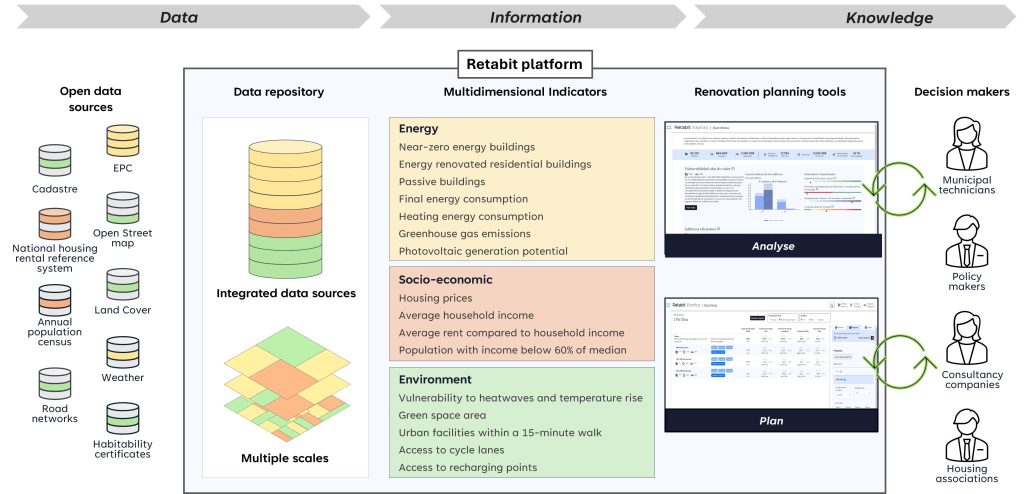
In this open-access article, authored by researchers from La Salle BCN and IREC – Institut de Recerca en Energia de Catalunya, we introduce RETABIT, a platform designed to bridge the gap between individual building upgrades and broader urban regeneration by integrating building, energy, economic, and social data into a unified framework. Retabit frames building renovation as a comprehensive urban process, supporting climate action, strengthening communities, and boosting economic resilience.
💡 Key takeaways for different audiences:
🎓𝗘𝗻𝗲𝗿𝗴𝘆 𝗿𝗲𝘀𝗲𝗮𝗿𝗰𝗵𝗲𝗿𝘀:
Retabit offers a novel, multidimensional Urban Building Energy Modelling (UBEM) approach. It overcomes common UBEM limits by integrating energy, environmental, and socio-economic data in one model. The platform enables scenario simulations from single buildings to city districts. Its open data pipeline harmonizes over 15 million public records, providing robust, current insights for analysis. Retabit is a data-driven, interdisciplinary toolkit supporting sustainable city research.
🏛️𝗠𝘂𝗻𝗶𝗰𝗶𝗽𝗮𝗹𝗶𝘁𝗶𝗲𝘀 & 👨🏼💻𝘂𝗿𝗯𝗮𝗻 𝗽𝗹𝗮𝗻𝗻𝗲𝗿𝘀:
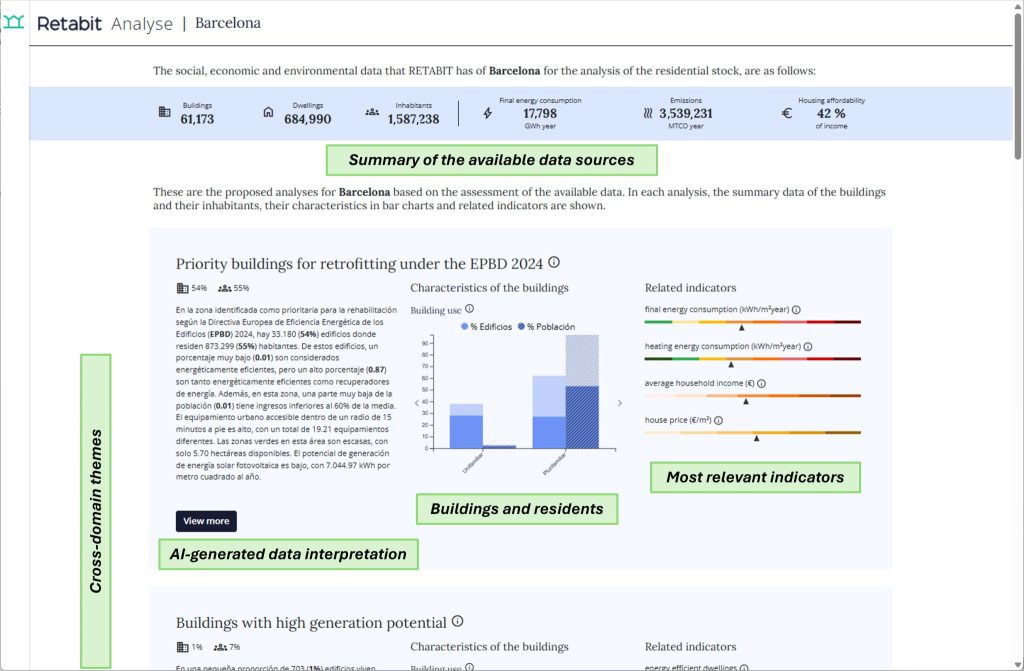
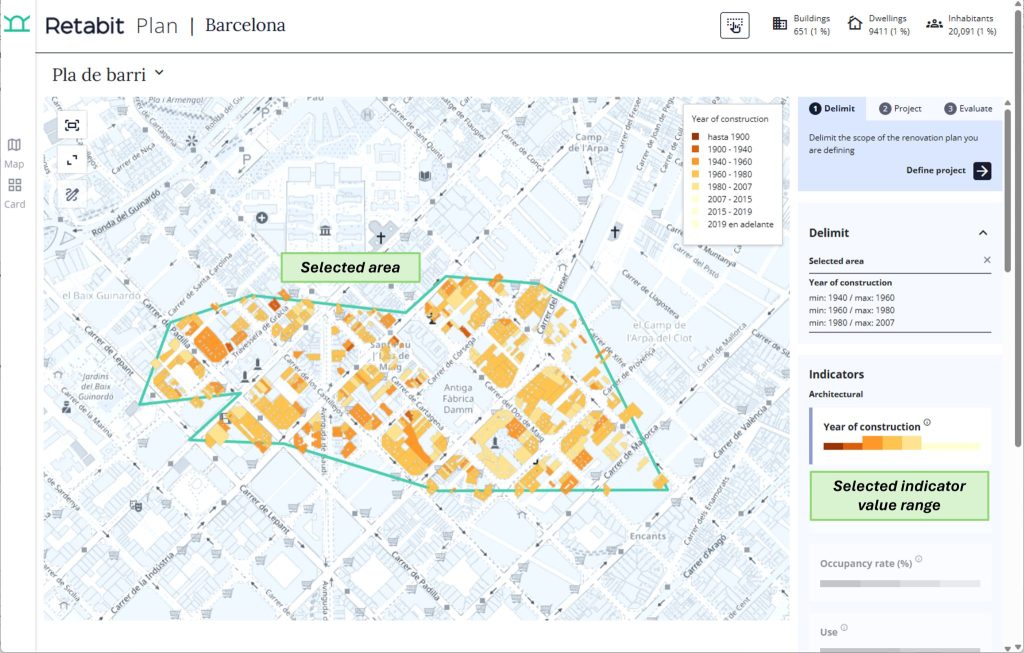
Retabit serves as a decision-support tool with interactive maps and dashboards to identify renovation priorities across neighborhoods. Planners can assess which buildings or districts to renovate first, considering energy waste and social vulnerabilities like energy poverty and housing affordability. The “Analyse” component uses dozens of indicators to highlight impactful interventions. The “Plan” component lets users design and simulate renovations (e.g., insulation upgrades), showing projected savings in energy, CO₂, and bills. Retabit helps cities move from reactive fixes to strategic, district-wide upgrades aligned with EU climate and social goals. It aids prioritizing projects, justifying investments, and coordinating departments.
👩💼𝗣𝗼𝗹𝗶𝗰𝘆 𝗺𝗮𝗸𝗲𝗿𝘀: Retabit supports new policy frameworks like the EU’s Energy Performance of Buildings Directive, which views renovation as a multifaceted process addressing social, economic, and environmental challenges. The platform informs evidence-based policies to target funding and incentives where they yield highest public value. For example, it identifies districts with inefficient buildings and high energy poverty, enabling programs to cut emissions and improve living conditions.
👉 Read the full open-access article for more details, including a case study in Sant Cugat del Vallès.